History of Golf Solitaire
Golf Solitaire takes its name directly from the sport it imitates: the aim is to clear as many cards as possible before the stock runs out, and your “score” is the number of cards remaining on the tableau — lower is better, exactly like golf. A full clearance in one run is a hole-in-one.
The game appeared in early twentieth-century patience compendiums and was included in Microsoft Solitaire Collection, where it introduced millions of players to rank-adjacency removal mechanics. It is closely related to Black Hole Solitaire and Tri Peaks, both of which generalize or extend the same core idea.
Full rules
The 52-card deck is dealt into seven columns of five face-up cards each. The remaining 17 cards form the stock. One card is turned face-up to start the foundation.
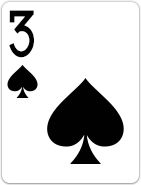
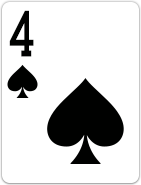
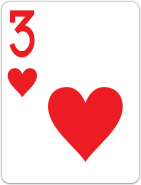
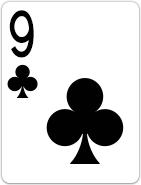
The top card of any tableau column can be removed to the foundation if it is exactly one rank above or below the current foundation top. Suits are irrelevant. Kings may wrap to Ace in Putt Putt; in this strict version, King is a dead end. When no removal is available or desired, draw the next stock card to the foundation to change the active rank. Win by clearing all seven columns before the stock runs out.
The rank-chain concept
Golf’s core skill is visualizing rank chains: sequences of removals where each card played creates a new foundation top that enables the next removal. A chain of six or more removals without drawing from stock is a strong result; a chain of ten or more is exceptional.
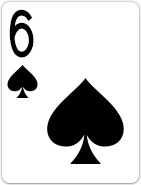
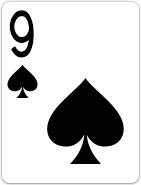
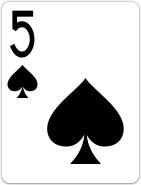
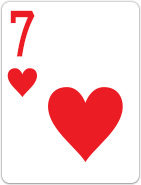
The resource that decides most Golf games is the bridge rank— a middle-value card (5–9) that can extend a chain in either direction. Spending a bridge rank to extend a chain of two may block a chain of six that would have been available a turn later.
Read the full Golf strategy guide →
How Golf differs from other removal games
Pyramid removes cards by pairing them to a fixed total (13). Golf removes cards by rank-adjacency from a single moving foundation. Tri Peaks uses the same rank-adjacency rule as Golf but on a three-pyramid layout that rewards broad exposure.
Golf is the most stock-dependent of the three: the 17-card stock is a limited resource that resets the active rank each time you draw. Black Hole Solitaire removes the stock entirely — there is only one foundation and no draws — making it the most purely combinatorial of the rank-adjacency family.
How Golf compares
- Tri Peaks Solitaire — three-pyramid removal with the same rank-adjacency rule; usually allows King-Ace wrap
- Black Hole Solitaire — one foundation, no stock; pure adjacency puzzle
- Pyramid Solitaire — pairs totaling 13; suit-irrelevant but pairing-based
- Baroness — pairs of Kings or pairs totaling 13 from a tableau of five columns
♠♥♦♣
Golf is part of The Fairway · Golf & adjacency.
More Golf & adjacency games
- Black Hole — Build a single foundation around the Ace of Spades.
- Putt Putt — Golf with Ace–King turns in both directions.
- Pyramid Golf — Clear a face-up pyramid with Golf-style rank runs.
- Tri Peaks — Clear three linked peaks of cards.
Also try
- Baroness (Pairing & removal) — Discard pairs summing to 13.
- Ninety-One (Grid & sequence puzzles) — Move top cards among thirteen piles until their values add to 91.
- Pyramid (Pyramid & peaks) — Pair cards summing to 13 to remove them.
Learn