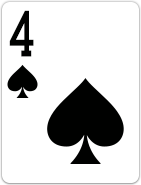
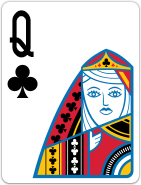
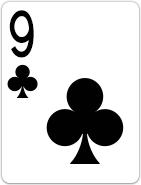
What is Laggard Lady Solitaire?
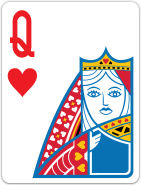
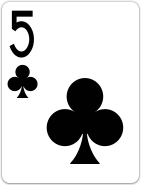
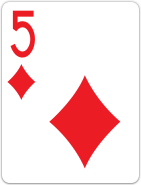
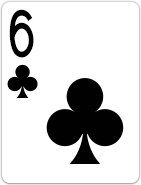
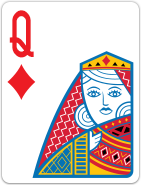
Laggard Lady is Intrigue with one extra brake on the deal. As in Intrigue, the eight Queens stay on the table as the immovable heads of eight columns and the other 96 cards are sorted onto sixteen foundations that run in two opposite directions: down from the Fives and up from the Sixes. The added rule is that a Five or a Six is only allowed to leave the layout and open a foundation while there are still more Queens showing than foundations already opened.
Because Queens appear gradually as the deal proceeds, that cap is tight early on. Many Fives and Sixes that Intrigue would have whisked straight onto a foundation are instead forced down into the columns, where they sit beneath the very cards that wanted to land on them. The result is a noticeably harder opening than Intrigue, all from the one phrase that gives the game its name — the lady who lags behind.
Full rules
Two standard 52-card decks are combined into a 104-card pack — eight of every rank. The eight Queens become the bases of eight columns; the first Queen dealt opens column one and each subsequent Queen opens another, up to eight. The remaining 96 cards fill sixteen foundations: eight Five-piles built downward 5 → 4 → 3 → 2 → A → K and eight Six-piles built upward 6 → 7 → 8 → 9 → 10 → J, each six cards, all regardless of suit.
The Laggard Lady restriction governs only the act of startinga foundation. Let the Queens currently dealt be the “Queens showing” and the Five-piles plus Six-piles already opened be the “foundations started”. A Five or Six may open a new foundation only while foundations started is fewer than Queens showing, so that afterwards the two counts stay balanced. Continuing an already-open foundation with a 4, 3, 2, A, K or a 7, 8, 9, 10, J is never restricted. The brake applies as the deal cascades; once the deal ends and all eight Queens are out, it no longer blocks anything for the rest of the game.
During play only the exposed top of a column moves. It can go to a foundation it continues or starts, or — the single tableau move — onto a vacant column peeled down to its Queen. You win when all sixteen foundations are complete, the same as every column being reduced to just its Queen.
Where the difficulty comes from
In Intrigue the greedy deal opens every Five and Six it can reach, so you usually start with many foundations already underway. Laggard Lady throttles that: until enough Queens have been laid out, surplus Fives and Sixes are dealt into the columns instead. Those buried starters are the cards a foundation absolutely needs to exist, and now they routinely begin the game pinned under other cards.
With only eight columns, no stock, and exactly one tableau lever — a column emptied down to its Queen — recovering a buried Five or Six is far more demanding than in Intrigue. The cap front-loads the difficulty into the deal, so reading where the trapped starters lie is the whole opening battle.
Laggard Lady is part of The Palace · Court games and is a variant of Intrigue.
More Court games games
- Intrigue — Eight Queen columns; eight Five-piles built down to the King and eight Six-piles built up to the Jack, regardless of suit.
- Glencoe — Suit-locked Intrigue: a Five or Six can only open a pile over a Queen of its own suit, then the body builds regardless of suit.
- Salic Law — Queens removed; eight King columns and eight A-to-J foundations built regardless of suit, no stock.
Also try
- Babette (Blockade games) — Two-deck blockade with ascending and descending suit foundations.
- Big Ben (Layout, cross & clock-face games) — Clock-face foundations building by suit.
- Miss Milligan (Miss Milligan & row dealers) — Double-deck patience with a weave reserve.
Learn